


Tesla Delivered 486,532 Vehicles in Q3. Here’s Why the Real Test Could Come on Oct. 21.
Tesla Delivered 486,532 Vehicles in Q3. Here’s Why the Real Test Could Come on Oct. 21.

Bram Berkowitz, The Motley FoolFri, October 2, 2026 at 5:10 PM UTC
0
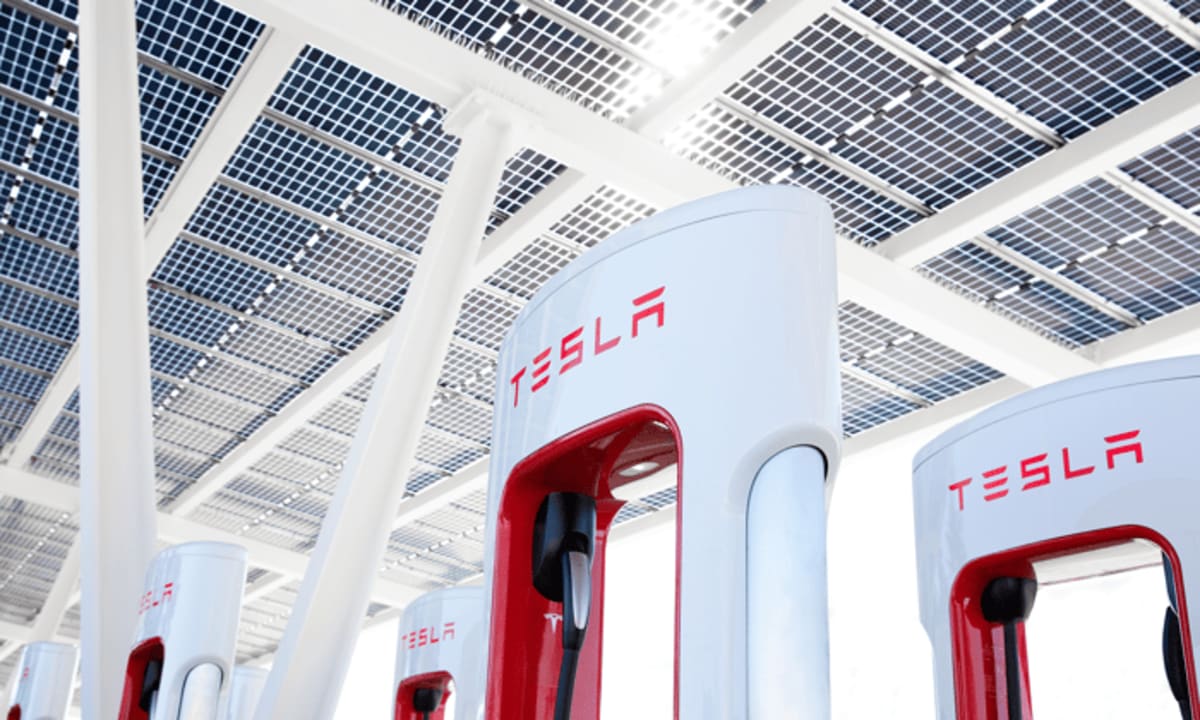
Image source: Tesla.Key Points -
Tesla's deliveries rose roughly 1.3% from the prior quarter.
However, investors are less focused on Tesla's electric vehicle business.
Other burgeoning parts of the company will be in focus when CEO Elon Musk addresses analysts on Oct. 21.
These 10 stocks could mint the next wave of millionaires ›
Shares of Tesla(NASDAQ:TSLA) had surged roughly 4.8% as of 12:44 p.m. ET on Oct. 2, after the electric vehicle maker reported higher-than-expected third-quarter deliveries.
Tesla said it delivered 486,532 vehicles in the third quarter, with production of 464,391. Deliveries are the closest measure Tesla provides for vehicles sold, while production is the number of vehicles built at Tesla's factories in a given quarter.
Missed AI’s "Act 1"? Act 2 Could Be 15x Bigger. Most investors think they missed the AI boat because they didn't buy Nvidia in 2005. But according to our analysts, we’re only at the end of "Act 1"—the R&D phase. "Act 2" is the global rollout. Continue »
Wall Street analysts had only expected Tesla to deliver 461,100 vehicles, so it was a big beat on consensus.
Deliveries rose about 1.3% from the prior quarter, although they were still down about 2% year over year. Production rose about 2.8% from the prior quarter.
Tesla also said it deployed 13.7 gigawatt-hours (GWh) of energy storage capacity through its commercial and residential battery-storage systems. The company deployed 13.5 GWh last quarter.
While the delivery beat is encouraging, as evidenced by the market's reaction, the real test will come on Oct. 21, when Tesla reports its full third-quarter earnings and holds a conference call with analysts.
EVs are no longer part of the core business moving forward
While Tesla helped commercialize electric vehicles in the U.S. and still accounts for the bulk of its revenue, the business is no longer part of Tesla's investment thesis.
To put things into perspective, Tesla in 2025 generated total revenue of nearly $95 billion and $1.08 diluted earnings per share. The company currently trades at nearly a $1.5 trillion market cap, so it's tough to say that the EV business is driving the stock.
Furthermore, part of the better-than-expected deliveries in the third quarter can be attributed to an improvement in the broader EV market.
As oil prices have surged due to the Iran war, that's created a better proposition for EVs. The renewables sector could see increased investment in the coming years, due to national security concerns exposed by the Iran war.
It's all about robotaxis and humanoid robots
As most people who follow Tesla now, the future of the business and stock at this valuation is fully self-driving (FSD) robotaxis and humanoid robots, which the market believes Tesla holds a big advantage in.
Tesla has already launched its robotaxi fleet in seven markets: Austin, San Francisco, Dallas, Houston, Miami, Orlando, and Tampa. Tesla also recently launched the Cybercab, a two-seated vehicle with no steering wheel, manual brakes, or side mirrors.
Advertisement
Still, it doesn't seem like Tesla has achieved fully unsupervised FSD yet, or at least it hasn't fully rolled it out in its robotaxi fleet. Most of the new markets are geofenced and involve some level of remote monitoring.
Meanwhile, Tesla's Optimus humanoid robots, which will supposedly be able to perform household chores and which Tesla CEO Elon Musk believes will be the company's "biggest product ever," have not yet been rolled out.
Limited manufacturing of Optimus has begun, but it could be a long process before it reaches wide-scale production because the company essentially has to build a supply chain for robots from scratch.
So, while the improvement in the EV business is certainly good news, I don't think it's a long-term driver of the stock.
What will be more important on Oct. 21 is when Musk and the rest of Tesla's management team provide an update on robotaxis and Optimus.
Given the stock's valuation, I think investors should wait for more evidence that both robotaxis and Optimus can scale effectively before buying.
The timeline for these products seems to be constantly changing, and there’s still no guarantee that each will work as effectively or be as successful as the market currently believes.
Investors have grown impatient. Tesla stock has underperformed the broader market over the past five years and is down roughly 15% this year.
Don’t miss this second chance at a potentially lucrative opportunity
Ever feel like you missed the boat in buying the most successful stocks? Then you’ll want to hear this.
On rare occasions, our expert team of analysts issues a “Double Down” stock recommendation for companies that they think are about to pop. If you’re worried you’ve already missed your chance to invest, now is the best time to buy before it’s too late. And the numbers speak for themselves:
Nvidia:if you invested $1,000 when we doubled down in 2009,you’d have $600,189!*
Apple: if you invested $1,000 when we doubled down in 2008, you’d have $63,011!*
Netflix: if you invested $1,000 when we doubled down in 2004, you’d have $365,910!*
Right now, we’re issuing “Double Down” alerts for three incredible companies, available when you joinStock Advisor, and there may not be another chance like this anytime soon.
See the 3 stocks »
*Stock Advisor returns as of October 2, 2026.
Bram Berkowitz has no position in any of the stocks mentioned. The Motley Fool has positions in and recommends Tesla. The Motley Fool has a disclosure policy.
Source: “AOL Money”
